
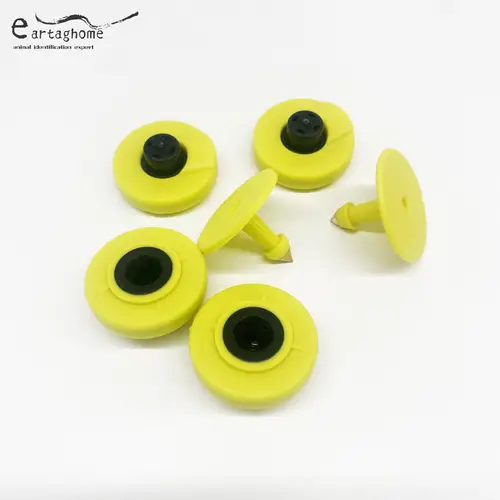
This is what is generally meant by “electronic ear tags,” and it has been the main arena where Suan Intelligent has achieved remarkable success over the past decade. We have provided these electronic IDs to tens of millions of pigs, cattle, sheep, pets, and all the adorable creatures in zoos.
What is RFID? It is a fundamental concept of the Internet of Things (IoT).
RFID (Radio Frequency Identification)
also known as wireless radio frequency identification, is a communication technology. A reader can identify a target and read or write relevant data via wireless signals, without the need for mechanical or optical contact between the two. Simply put, information is exchanged wirelessly between the ear tag and the reader. You can try to dodge it, but as long as you’re within range, you’ll be read.
In everyday life, access cards, transit cards, bank cards, and ID cards all use RFID—they just operate at different frequencies and follow different protocols.
Note that the tags are passive, meaning they don’t require their own power source. This is why they can be made so small and lightweight, and why they’re widely used in the Internet of Things. This characteristic of RFID is completely different from the smart ear tags we’ll introduce next time.
The tags contain a chip and an antenna, while the readers have a chip, an antenna, and a power source. How do these two devices generate electrical signals? Take a look at the chapter on electromagnetism in your high school physics textbook.
Based on frequency
Electronic ear tags are divided into two major categories:
- low-frequency (LF)
- ultra-high-frequency (UHF).
More than a decade ago, the Ministry of Agriculture selected several domestic farms to conduct comparative tagging tests using both technologies. Each had its own advantages and disadvantages, but the results were never made public.
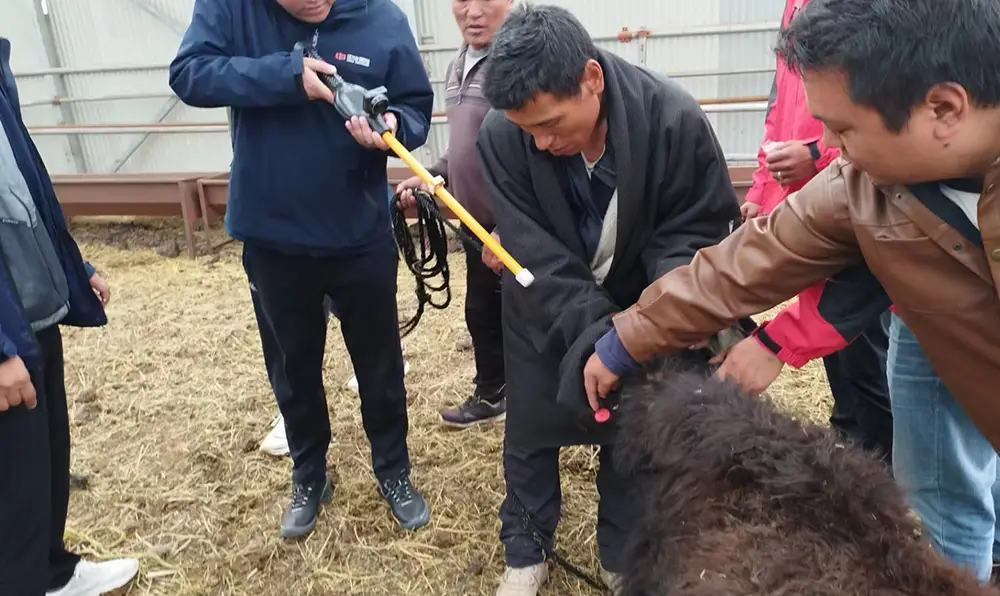
Low-frequency tags are internationally recognized for their ability to identify individual animals and their resistance to environmental interference; they account for the vast majority of usage and are covered by specific international livestock ear tag standards. They are characterized by a stable but short read range, typically only 10–20 centimeters.
Due to their widespread international use, low-frequency ear tags are further subdivided into two categories:
- FDX full-duplex
- HDX half-duplex.
Generally, when the industry refers to “electronic ear tags”, it means the former. The latter was developed to address the short reading range of the former and is primarily used in modern dairy farming; its application is very limited, and virtually no domestic manufacturers produce them.
UHF technology has been used primarily in China—specifically in Qinghai—over the past eight years, as the Qinghai agricultural authorities selected UHF for their yak traceability project. Of course, we are also supplying it on a large scale to some leading pig farming groups. Its key features include the ability to read multiple tags simultaneously and a long read range of 1–8 meters; however, it is highly susceptible to environmental factors and time, particularly the influence of liquids, which can cause the read range to decrease dramatically.
Based on their physical form
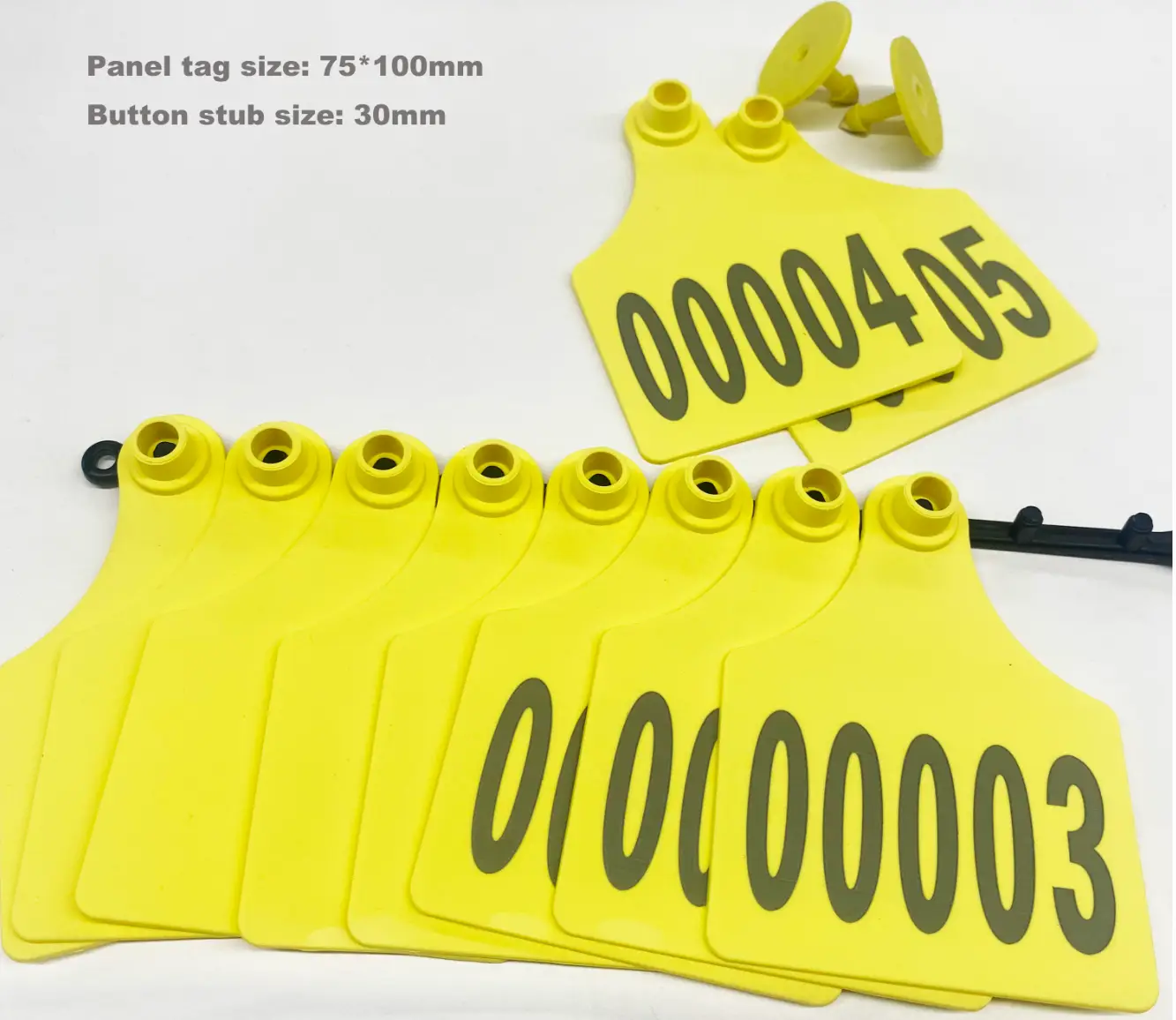
UHF chips are divided into two major categories: external and implantable. External chips are further divided into two types: first, ear tags—consisting of a male and a female tag—which are placed in a tagging pliers and snapped onto the animal’s ear with a click. Second are leg bands: pigeon rings and poultry rings.
It is extremely small—it looks like two grains of rice joined together—and the injection and implantation process is very quick and safe. With common specifications including 3×13mm, 2×12mm, and 1.4×8mm. The chip and magnetic rod antenna are housed inside the tube and are injected subcutaneously into animals—primarily pets and high-end fish such as golden and silver arowanas—using a syringe or injection gun. The advantage is that there is no risk of external tags falling off; provided the product is of high quality, once implanted, it remains effective for the animal’s entire lifetime. The disadvantage is that it is not immediately apparent whether the animal is tagged, which may lead to disputes in the insurance industry and complicate the renewal of insurance policies.
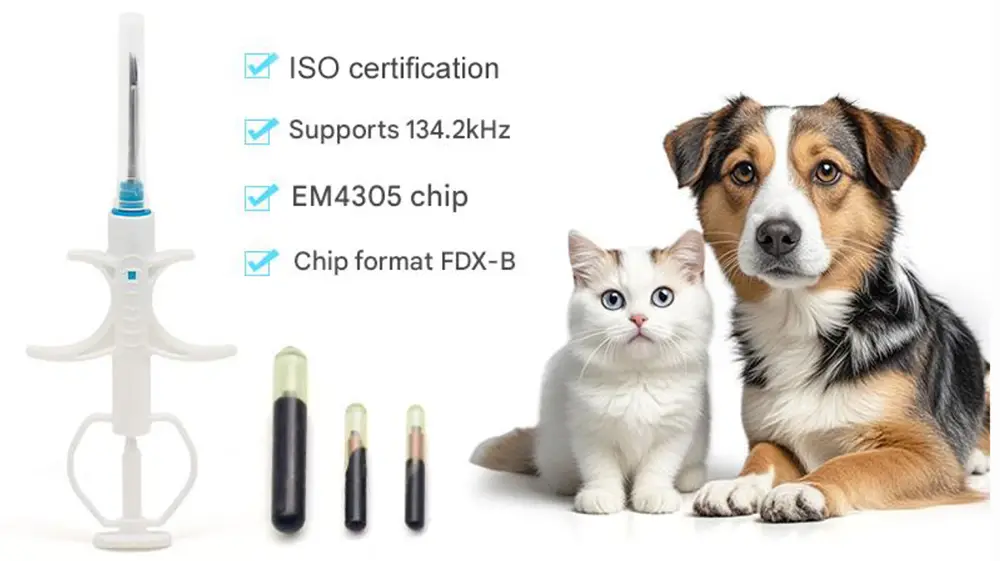
For 3×13 mm implantable microchip, Suan Intelligent offers a bio-resin version featuring a fine textured surface that reduces in-body migration; the surface can also be laser-printed with numbers. These are generally used for livestock such as pigs, cattle, and sheep.
The 2×12 mm implantable microchip is the most widely used and is suitable for all animals except fish.
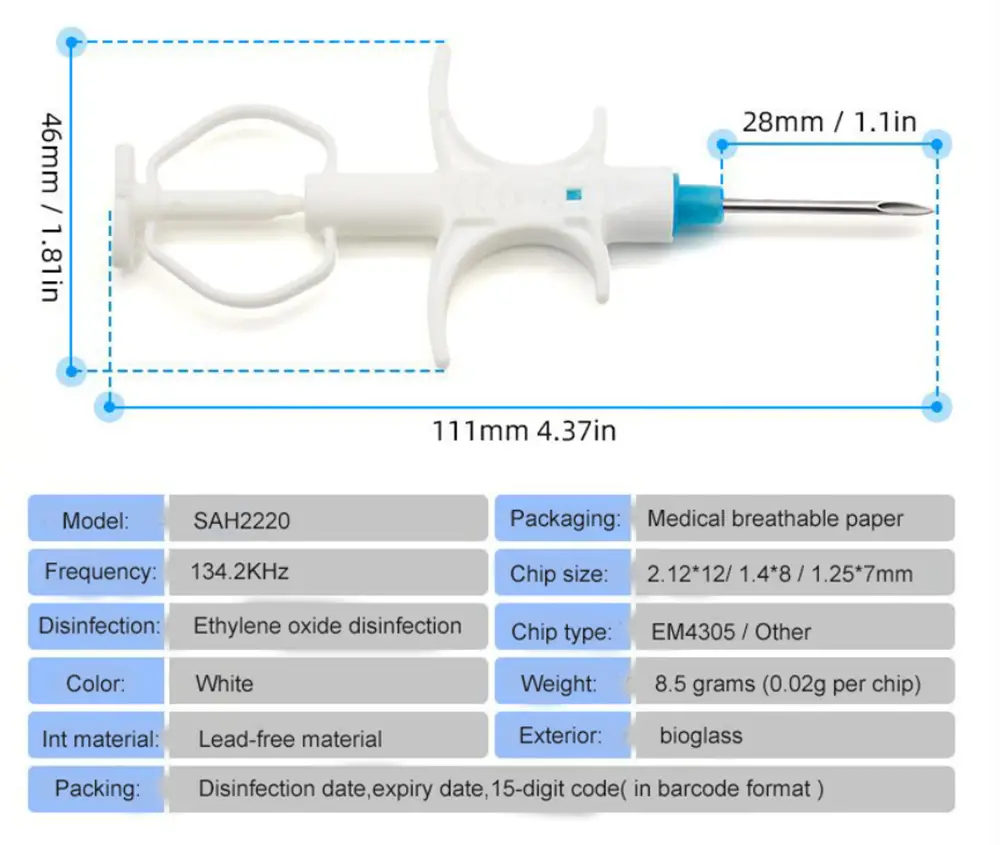
Depending on the application
They are further categorized into types for pigs, cattle, sheep, pets, fish, and birds.
Ear tags are generally used extensively for pigs, cattle, and sheep. Depending on customer management requirements and usage environments, they come in various shapes; Suan Intelligent already has over a hundred sets of molds.
Implantable chips are generally used for breeding pigs, dairy cows, pets, and fish. Various types of leg bands are suitable for poultry, with the most common applications being pigeons and free-range chickens.
There are three main types of manufacturers in the industry:
| Manufacturers category | feature |
| manufacturers specializing exclusively | These are rare—numbering only three to five—because the volume of RFID electronic ear tags in China has remained small and is growing slowly. Furthermore, due to foreign market protectionism and high entry barriers, exports are very limited, unlike other electronic products—including the RFID cards and tags mentioned below—which enjoy massive sales and global distribution. |
| Plastic ear tag manufacturers | These primarily produce plastic ear tags, though they also have a few sets of molds for producing electronic ear tags. |
| Card and specialty tag manufacturers. | These primarily produce various types of RFID cards, such as access control cards, as well as various RFID specialty tags, though they also have one or two sets of molds for producing electronic ear tags. |
Quality Issues
Analyzing quality must start with cost.
- First is the plastic raw material, which accounts for a portion of the cost. While the origin of the material matters, it is even more critical to avoid using what the industry refers to as “scrap material.” Poor-quality material leads to a very short service life, insufficient tensile strength, inadequate bonding strength, and other issues. Additionally, the selection of standard metal heads is crucial; inferior ones are prone to rust and are difficult to mark, with costs ranging from 3 cents to 20 cents RMB—a significant difference.
- Second is the production process. Is there sufficient customer feedback to continuously improve processes and molds? Is full inspection conducted at every stage of the multi-step production process? Are high-tech, intelligent full-inspection procedures employed?
- Third is design. From molds to antennas (especially UHF antennas), has the company accumulated sufficient experience or does it possess high-level design capabilities? Has a product undergone multiple rounds of improvements following small-scale field testing?
There are many other factors, too numerous to list here, but the three points above essentially boil down to cost and commitment: Have we truly held our market and customers close to our hearts like family? Do you approach product manufacturing with a mindset of constant vigilance and caution?
That concludes our introduction to RFID electronic ear tags. We’ll introduce Suan Intelligent’s smart ear tags and various reading tools next time.